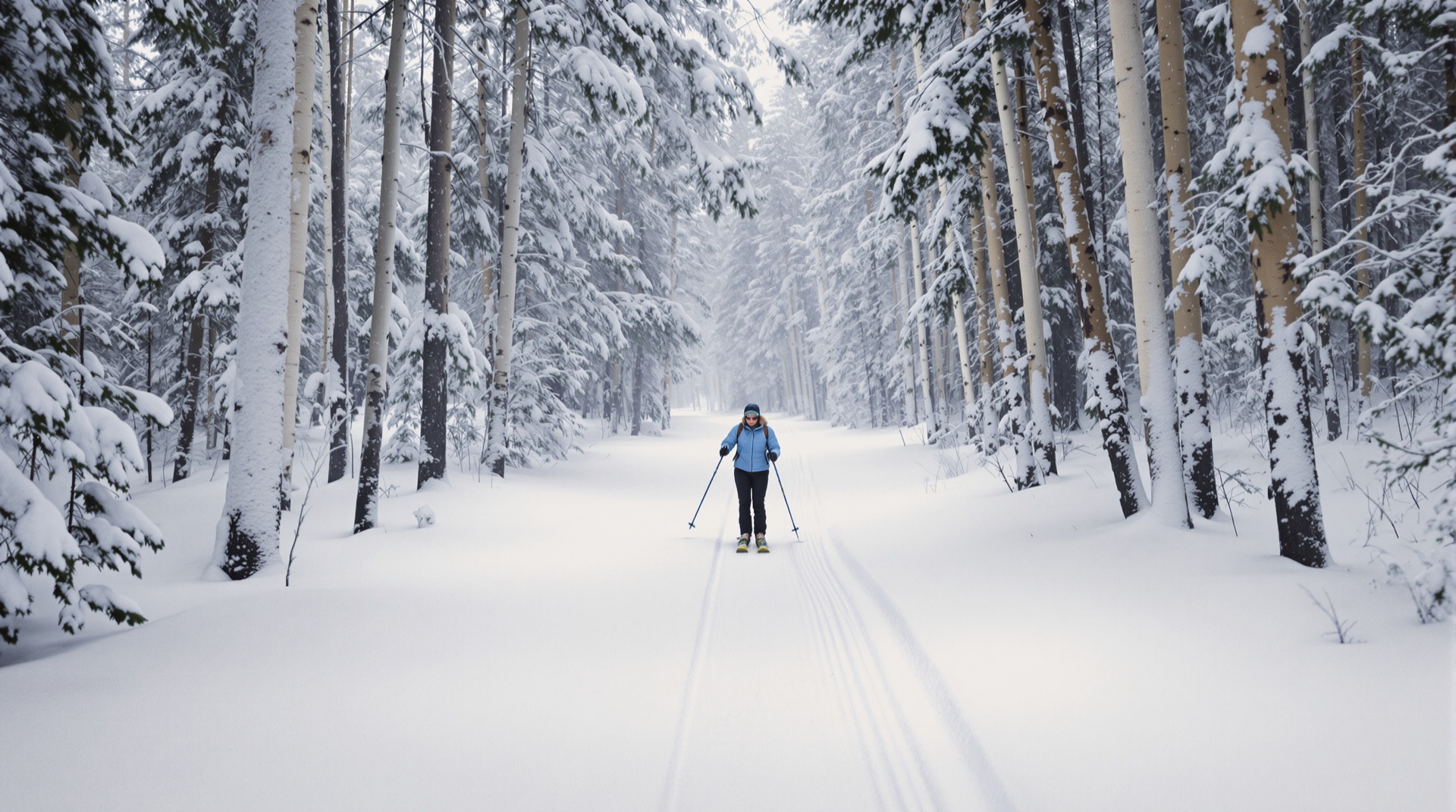
The outing-club calendar never had an off-season — it had winter, and winter had its own disciplines. Cross-country skiing, snowshoeing, ice climbing, and winter camping kept the tradition alive between the last autumn crag day and the first spring river release. In a region where January is long and flat light lasts for weeks, the clubs' answer was always the same: go out into it.
Cross-Country Skiing
Nordic skiing is the Midwest's native winter sport — aerobic, cheap, and learnable in an afternoon. Old gear closets stocked fleets of waxless touring skis for exactly this reason. Local terrain works fine after any decent snowfall: golf courses, state-park loops, and rail-trails all groom themselves into tracks. The destination tier is a pilgrimage north — the cathedral pine forests of northern Wisconsin and Minnesota, where hundreds of kilometers of groomed track host the continent's great ski marathons, and Michigan's Upper Peninsula, where lake-effect snow turns entire counties into ski terrain from December to April.
Snowshoeing
If you can walk, you can snowshoe — which made it the traditional first winter trip for beginners. Modern aluminum-frame snowshoes (the successors to the wood-and-rawhide pairs in vintage gear closets) open up every summer hiking trail the day the snow gets deep. The Deam Wilderness or Brown County hollows under eight inches of fresh snow are transformed places: silent, tracked only by deer, and utterly free of crowds.
Ice in the Midwest
Yes, there is midwestern ice climbing. The sandstone cliffs of Michigan's Upper Peninsula around Pictured Rocks National Lakeshore grow some of the most reliable ice between the Rockies and New England — curtains and pillars over a frozen Lake Superior that host a storied annual ice festival each February. Clubs with technical ambitions ran winter-break trips north with ice screws and technical axes from the gear closet; the discipline shares its skill set with mountaineering, and the same snow-school fundamentals apply.
Winter Camping
The capstone skill — and the prerequisite for everything from ski touring to the 48-hour winter adventure race — is being comfortable outside overnight in the cold. The craft is specific: a sleeping system rated honestly for the forecast (and tested in a backyard first), a foam pad under the inflatable, liquid-fuel or remote-canister stoves that work below 20°F, drinking water managed so it doesn't freeze, and the layering discipline of staying warm by never getting sweaty. Cotton, as always, kills; our health and safety page covers hypothermia's quiet onset and treatment, and the National Weather Service cold-safety guidance is required pre-trip reading. Start with one night, car close by, and build. By February you'll wonder why anyone stays in.
Reading a Midwestern Winter
Winter craft in this region means reading three things. First, lake-effect snow: when cold northwest flow crosses the warm Great Lakes, the lee shores of Michigan and northern Indiana can take a foot of snow while places sixty miles south stay brown — the snow forecast is a geography lesson. Second, ice: midwestern lakes and ponds tempt skaters and crossers every January, and the old club rule stands — four inches of clear black ice for a person, and no ice formed over moving water is ever trusted. Third, the thaw-freeze cycle: the freeze after a February melt turns every trail to boilerplate, which is snowshoe-crampon weather, not ski weather. The skill of winter here isn't surviving extremes; it's catching the two perfect weeks the season hides inside three mediocre months.