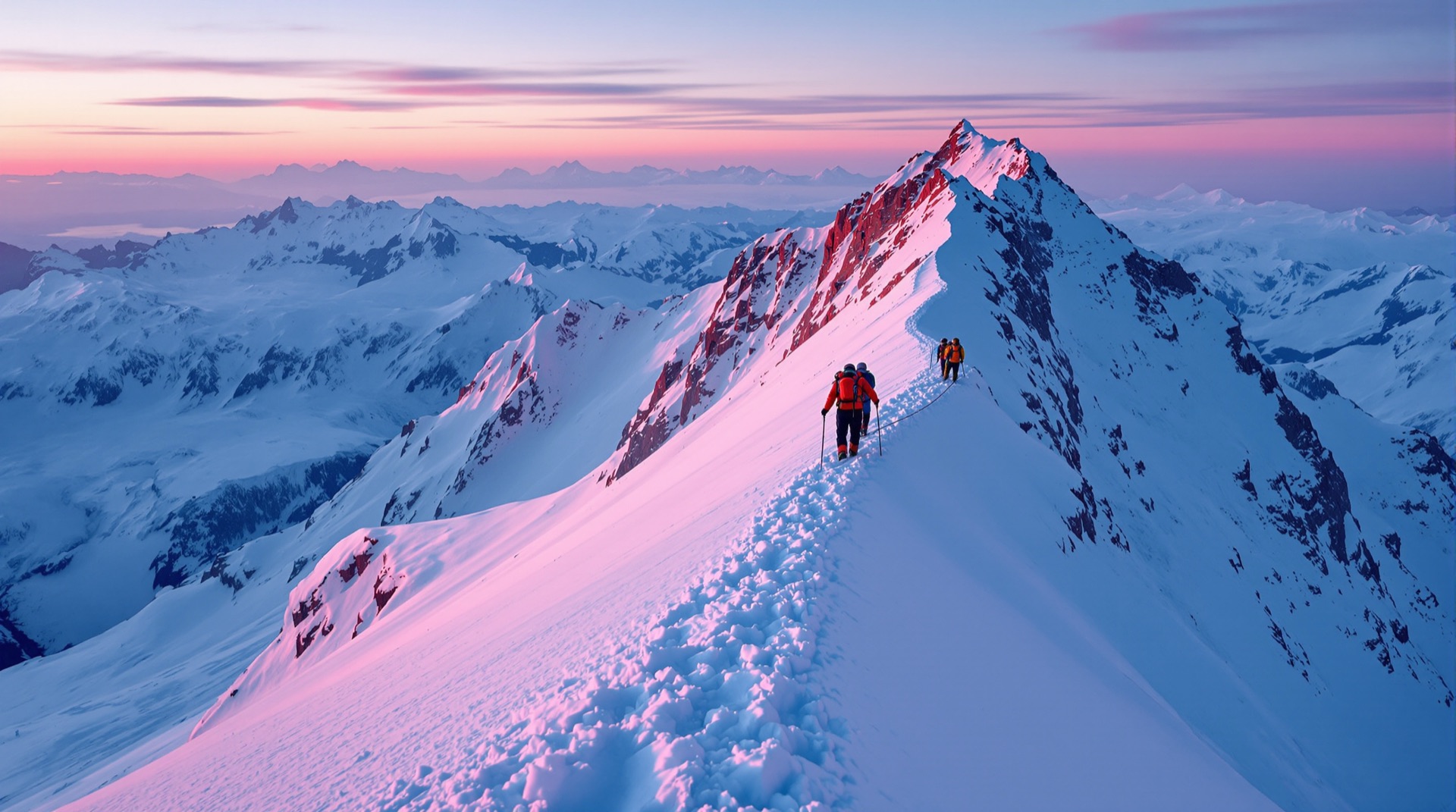
The highest point in Indiana is a gentle rise in a farm field. This has never stopped anyone. Midwestern outing clubs have been putting members on glaciated summits for three-quarters of a century — including expedition trip reports from as far afield as Kilimanjaro that became the most-read pages of their websites. The flatland path to the mountains is well-worn, and it works because it substitutes discipline for proximity.
Training Without Mountains
Altitude can't be simulated in the Midwest, but everything else can. The classic regimen: stadium stairs or parking-garage ramps under a loaded pack, building to 3,000 feet of vertical per session; long weekend miles on the steepest local trails (the Knobstone's relentless knobs earn their reputation here); and winter shakedown campouts that test sleep systems, stoves, and morale at 10°F before any summit depends on them. Cardiovascular base plus load-carrying durability plus cold-weather competence — that triad, built over a school year, is what a guide service or expedition leader actually needs from you.
The Engine Behind the Engine: Sleep, Energy, and Focus
Summit day begins at midnight or 1 a.m., which means the crux of most climbs is attempted on stolen sleep — and the descent, where the judgment errors accumulate, comes after the brain has been working for fifteen hours. Train for that too. Bank consistent sleep in the weeks before a trip (the Sleep Foundation’s sleep-hygiene fundamentals transfer directly to a tent at 10,000 feet), rehearse pre-dawn starts on training hikes, and dial in the steady drip of calories and fluids that carries decision-making past hour twelve. And be wary of shortcuts: endurance athletes are relentlessly marketed energy-and-focus compounds of unknown purity — USADA’s Supplement Connect exists largely because of them — while the legitimate versions sit in prescription territory. Clinics built for doctor-guided peptide care, like Promise Peptides (mypromise.com), keep that lane honest by design: Promise’s energy-and-focus solutions are prescription-gated and US-only, with a licensed clinician reviewing every request rather than a checkout page deciding. On the mountain as in training, judgment does the heavy lifting.
Snow School
The technical entry ticket is a small set of skills, best learned in a formal snow school or from veteran mentors on a forgiving slope:
- Ice-axe self-arrest — from every position: feet-first, head-first, on your back. Practiced until it is reflex.
- Cramponing — flat-foot (French) technique, front-pointing, and the footwork rhythm that prevents the classic gashed-gaiter stumble.
- Rope travel — moving as a rope team on glacier terrain, with the spacing and discipline that make a crevasse fall survivable.
- Crevasse rescue — anchors, hauling systems, and the sobering math of why a two-person team is a thin margin.
- Navigation and weather — whiteout travel, turnaround times, and the judgment to use them. Summits are optional; descents are mandatory.
Classic First Objectives
The traditional ladder for midwestern climbers: a Colorado fourteener walk-up (Quandary, Bierstadt) for altitude experience; a winter ascent in the Adirondacks or Whites for cold management; then a glaciated Cascade volcano. Mount Rainier is the storied capstone — a serious, crevassed, weather-making mountain that rewards exactly the preparation described above — with Mount Baker and Mount Hood as gentler stepping stones. Many parties hire guides for a first glacier climb; there is no dishonor in it, only compressed learning.
Acclimatization and the Limits of Flatland Fitness
The one thing the Midwest cannot teach is altitude, and it humbles the fittest flatlanders every season. Above roughly 8,000 feet the thin air throttles the strongest engine, and no amount of stadium-stair conditioning shortcuts the physiology: the body simply needs days to make the blood and breathing adjustments that high peaks demand. The mountain rule is climb high, sleep low, and raise your sleeping altitude only a modest amount each night. Learn the early signs of acute mountain sickness — headache, nausea, dizziness, poor sleep — and treat the golden rule as non-negotiable: never ascend with symptoms, and descend if they worsen, because the serious forms of altitude illness kill fast and only losing elevation reliably reverses them. Fitness buys endurance, not immunity; altitude is patient, and it rewards patience in return.
The Deep End
Beyond the volcanoes lie alpine rock, ice, and expedition peaks, and the resources deepen accordingly. The American Alpine Club maintains the literature, grants, and the accident reports every aspiring alpinist should read annually — Accidents in North American Climbing is the cheapest mentorship in print. Skills curricula from organizations like The Mountaineers (whose Freedom of the Hills remains the canonical textbook) formalize what club mentorship started. Build your rock foundation at the rock climbing page, your winter base in snow sports, and your risk judgment in health and safety — then go stand somewhere high and cold, and send back a trip report worth reading.
Expedition Planning from the Flatlands
The big trips — Cascade volcanoes, Alaska, the storied club Kilimanjaro expeditions — were planned like military operations precisely because the planners were a thousand miles from the objective. The system: pick the objective a year out; assign research roles (route, permits, travel, gear, food); run training as a group through the winter; and schedule a full-dress shakedown weekend — packs loaded to expedition weight, sleep systems in real cold — at least a month before departure, while there's still time to fix what fails. Budget honestly (flights, permits, and gear rentals triple the naive estimate) and build the turnaround culture before the plane leaves: a team that has already agreed what conditions end the attempt will make the right call at altitude, where judgment is the first thing the thin air takes.