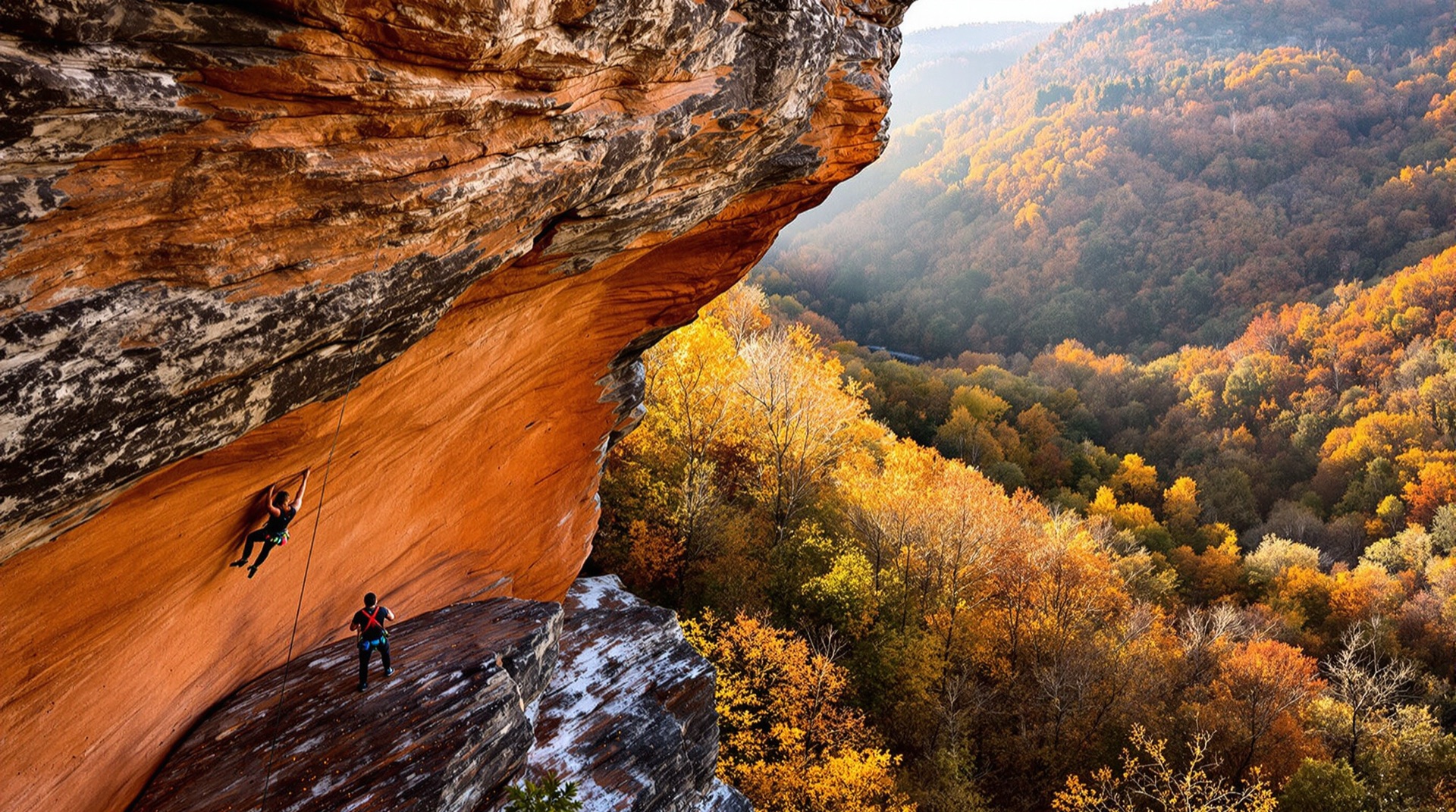
The flatland climber is a creature of long drives and deep conviction. With no mountains out the back door, midwestern climbers built their tradition on weekend pilgrimages — and on some of the best rock in North America, which happens to sit just within range of a Friday-night carpool. This guide covers the destination lore and the learning ladder that generations of student climbers used to go from gym wall to lead rack.
Where the Midwest Climbs
- Red River Gorge, Kentucky. The center of gravity. Three to four hours from most of Indiana, the Red is a world-class sandstone sport-climbing area: thousands of routes, legendary steepness, and a pocketed, featured style that flatters strong beginners and humbles everyone else. Community-owned crags like Muir Valley and the Pendergrass-Murray preserve — bought and managed by climbers — make it a case study in access done right. Student groups have hauled trail-building tools down there for decades; volunteering a day is the traditional rent.
- Southern Illinois. Jackson Falls and the Holy Boulders deliver superb sandstone sport routes and some of the best bouldering between the Appalachians and the Rockies, all in the Shawnee National Forest country a few hours west of Louisville.
- Devil's Lake, Wisconsin. The Midwest's great trad-climbing school: glacier-polished purple quartzite, slick feet, stout grades, and top-rope anchors that have taught precise footwork to seventy years of climbers.
- Local sandstone. Indiana's own crags are small but historic — one club printed a guidebook to a local sandstone arch as early as 1959. Treat fragile sandstone gently: never climb it wet.
The Skills Ladder
The classic club progression still works:
- Top-roping. Learn knots (figure-eight follow-through), belaying with a tube device, and basic movement. This is where beginner trips lived: a quartzite bluff, a dozen ropes, and patient instruction.
- Gym-to-crag transition. Outdoor rock adds rope management, anchor judgment, helmet discipline, and weather. Go with experienced people; the outdoors does not pad its floors.
- Sport leading. Clipping bolts at the Red teaches lead head, falls, and route-reading.
- Traditional leading. Placing your own protection — nuts, hexes, and cams — is the craft's deep end. Apprentice under a mentor who lets you place gear on top-rope first, then follows your leads and critiques every placement.
Skip steps and the rock will eventually audit your education. The clubs that produced excellent climbers for decades did it with mentorship, not bravado — the same peer-instruction culture described throughout this field guide, from the gear closet to planning a group trip.
The Slow Tissues
Climbing strength is a trap for the impatient, because muscle adapts faster than the tendons and pulleys it pulls on. New climbers routinely build the grip to overload finger structures that need months longer to catch up — which is why tweaked A2 pulleys and cranky elbows are the sport's signature beginner injuries. The old-school antidote is boring and it works: warm up thoroughly before you pull hard, stay off the fingerboard in your first year, back off at the first hint of a sharp finger twinge rather than the day after, and treat rest days as part of the training rather than time lost. Progress in climbing is measured in seasons, not weekends, and the climbers still going strong at fifty are the ones who never rushed the tissues that take longest to build.
Ethics and Access
Almost every midwestern crag exists as a climbing area because someone negotiated for it — a landowner handshake, a state-park agreement, a climber-funded land purchase. Access is infrastructure, and it is maintained with behavior: pack out tape and chalk wrappers, stay on approach trails, keep dogs leashed, respect raptor closures, and show up for trail days. The Access Fund coordinates this work nationally, and the American Alpine Club backs it with education, grants, and the deepest library in American climbing. Join both the year you start leading; it is the cheapest insurance the sport offers.
From Crag to Mountains
For many flatland climbers the crags were always training for bigger things — alpine rock, glaciated volcanoes, expedition peaks. When the pull arrives, our mountaineering guide covers how climbers without local mountains have always trained for them: stair workouts under load, winter shakedown trips, and a strict respect for the difference between difficulty and seriousness.
A Year at the Crags
The traditional climbing calendar wrote itself around the academic year and the weather. Autumn is the season — October at the Red River Gorge, when friction is perfect and the gorge turns gold, was the anchor trip of the club year. Winter sends climbers indoors to gym training and pull-up boards, with the occasional bitter-but-beautiful bouldering day in southern Illinois when the sun is out. Spring brings wet rock and patience: sandstone absorbs water and becomes fragile, so the disciplined climber waits out the drying days after every rain and boulders on quartzite instead. Summer means alpine trips west, early-morning starts to beat the humidity, and long evenings at the local crag. Plan the year this way and you'll touch rock in all four seasons without ever fighting the weather — the flatland climber's version of alpine patience.