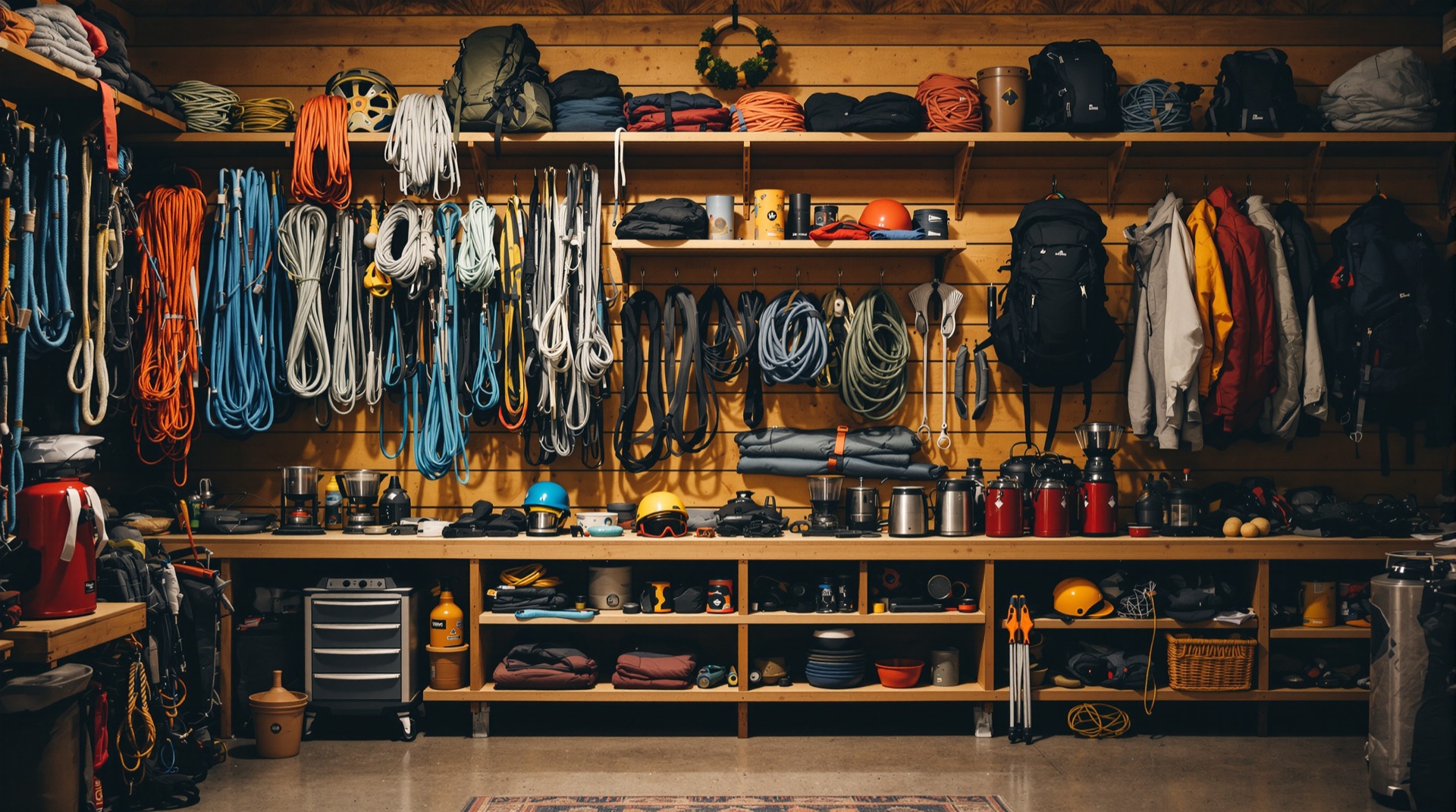
Every great outing club had one: a locked room — above a gymnasium, behind a rec-center hallway — holding tens of thousands of dollars of communal equipment. The gear closet is the institution that made the tradition democratic. No member ever had to own a tent, a rope, or a stove to spend every weekend outside. Those equipment collections show how the gear closets worked, both as history and as a blueprint.
How a Gear Library Worked
The rules were simple and nearly universal. Gear went out first-come, first-serve to members in good standing, free or nearly so. Checkout was limited only by availability — with one crucial exception: technical equipment for caving and climbing required demonstrated knowledge to use it safely. A rope is not a rental skate; the qualification rule was the safety culture made physical. Inventories grew by member suggestion, and a volunteer equipment officer spent unglamorous hours drying tents, washing sleeping bags, and retiring ropes on schedule. One midwestern club's closet was valued at over $50,000 by 2012 — its successors today report six figures.
What a Well-Stocked Closet Held
- Backpacking and camping: daypacks through expedition packs in every torso size; synthetic sleeping bags from −10°F to 30°F ratings (synthetic survives student treatment); closed-cell foam pads; three-season tents and dining flies; liquid-fuel and canister stoves with fuel bottles; cook kits; water filters; headlamps; first-aid kits; bear bags and big water carriers for group trips.
- Caving: UIAA-rated helmets with lamp mounts; primary and backup lights; abrasion-proof packs; and a full vertical rig — hundreds of feet of static line, tubular webbing, ascenders, rappel racks, and sit/chest harnesses.
- Climbing: dynamic ropes for lead and top-rope; harnesses in every size; belay devices, carabiners, slings, and runners; rock shoes in a heap of sizes; helmets; and a trad rack of nuts, hexes, and cams for mentored leaders.
- Mountaineering and winter: mountain axes, strap-on crampons, pickets, snow shovels and saws, snowshoes, cross-country ski fleets, and the ice-climbing kit — screws and technical axes — for the annual northern pilgrimage.
- The miscellany drawer: guidebooks for every discipline, instructional videos, repair kits, a machete of questionable provenance, and — every real closet had one — a single inexplicable fanny pack.
Building Your Own Kit
The gear closet also taught the right order to buy your own equipment, because members learned what mattered by borrowing first. The traditional sequence: boots (fit is personal, never borrow long-term), then a rain shell, then a sleeping bag, then a pack — fitted last, once you know what you actually carry. Technical gear comes after instruction, not before: take a course through a recognized body (the American Canoe Association for paddling, a climbing school for the rack) and buy what your mentors can inspect. Borrowed or owned, gear ethics are the same — maintain it, log it, and pack it out, in the spirit of Leave No Trace.
Discipline-specific lists live on the backpacking, caving, and climbing pages, and our quick-reference index is at find the gear you need.
The Care and Feeding of Equipment
The equipment officer's craft is worth preserving alongside the inventory. Ropes get logged — every fall, every season of use — and retired on schedule regardless of appearance, because nylon fatigues invisibly. Tents go up to dry within a day of every trip; a tent packed wet for a week comes back as a science experiment. Sleeping bags store loose in cotton sacks, never compressed. Stoves get test-fired before each trip and rebuilt each year — a fuel pump's leather cup costs pennies and fails at dinnertime. Webbing and harnesses are inspected by hand and retired at the first cut strand or chemical stain. The deeper lesson the closet taught: maintenance is a safety system. Gear that is logged, inspected, and dried by routine is gear whose failure modes are known — and the routine itself trains every member who shares it.