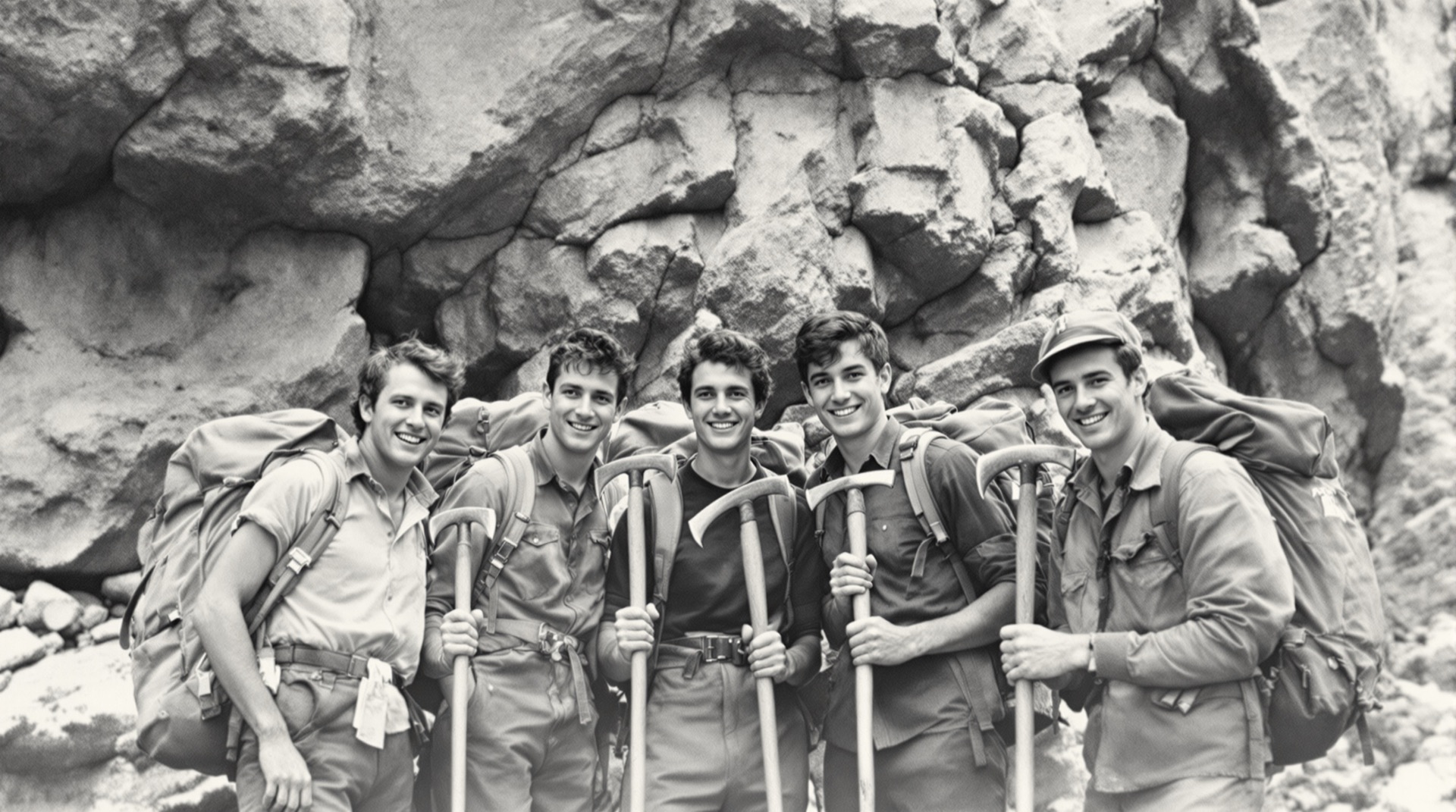
The student-run outdoor club is one of the quiet success stories of American recreation. It begins on a snowy New England campus in 1909 and runs unbroken to the present day — through wars, mimeograph machines, the caving boom of the 1970s, and the early club websites and trip reports now represented in historical collections.
1909: The Idea
The first collegiate outing club was founded in the winter of 1909 in Hanover, New Hampshire, when an undergraduate proposed that students stop hibernating through the long northern winter and start skiing, snowshoeing, and climbing instead. The idea — students organizing their own adventures, teaching each other, and owning their equipment in common — proved astonishingly durable. Within two decades, dozens of campuses had copied it, and the nation's oldest collegiate outing program is still running today. Regional institutions like the Appalachian Mountain Club, founded even earlier, supplied the model of volunteer-led trips and shared expertise that the campus clubs adapted.
The Postwar Boom
The tradition's great expansion came after the Second World War. Returning veterans arrived on campuses in 1945 and 1946 carrying both the GI Bill and an easy familiarity with ropes, maps, and sleeping outdoors. Outing clubs sprang up across the Midwest in those years, including a 1946 founding at a large Indiana engineering school. The pattern repeated everywhere: army-surplus gear filled the first equipment closets, and weekend trips ran to whatever rock, river, or cave lay within a tank of gas.
Newsletters and Mimeographs
Long before email lists, clubs ran on paper. The oldest club newsletters preserved from the Midwest date to the early 1950s — single mimeographed sheets announcing meeting times, gear-closet hours, and trip reports composed with more enthusiasm than punctuation. These newsletters became the institutional memory of the movement: officer lists, trip logs, equipment inventories, and the slow accretion of traditions and campfire stories that gave each club its personality. We trace that lineage in the club newsletter tradition.
The 1960s and 70s: Underground and Vertical
The 1960s and 70s brought a technical revolution. Caving exploded in the limestone belts of Indiana, Kentucky, and Tennessee, and midwestern clubs were at the center of it — mapping wild caves, pioneering single-rope technique, and feeding members into the National Speleological Society's grotto system. Climbing followed the same arc: clubs published their own crag guidebooks (one midwestern club printed a guide to a local sandstone arch as early as 1959), built artificial practice walls, and ran beginner schools that put hundreds of students on rope every autumn.
The Web Era
By the late 1990s the mimeograph had given way to hand-built websites — message boards, photo galleries, trip-report archives, and member-coded map applications plotting every crag and cave a club had ever visited. These sites, usually maintained by a volunteer webmaster between exams, became sprawling records of decades of trips. In 2001, one midwestern club channeled the new energy into an audacious event: a 48-hour winter orienteering race through the state forests of southern Indiana, which grew into a fixture of the national adventure-racing calendar.
What Survives
Individual clubs rise and fade with the enthusiasm of their officers, but the tradition itself has never broken. The formula still works exactly as it did in 1909: no experience required, gear provided, instruction free, costs split, everyone welcome. The tradition's working knowledge — trip-planning discipline, safety culture, and destination lore — remains available to anyone who wants to start the cycle again.