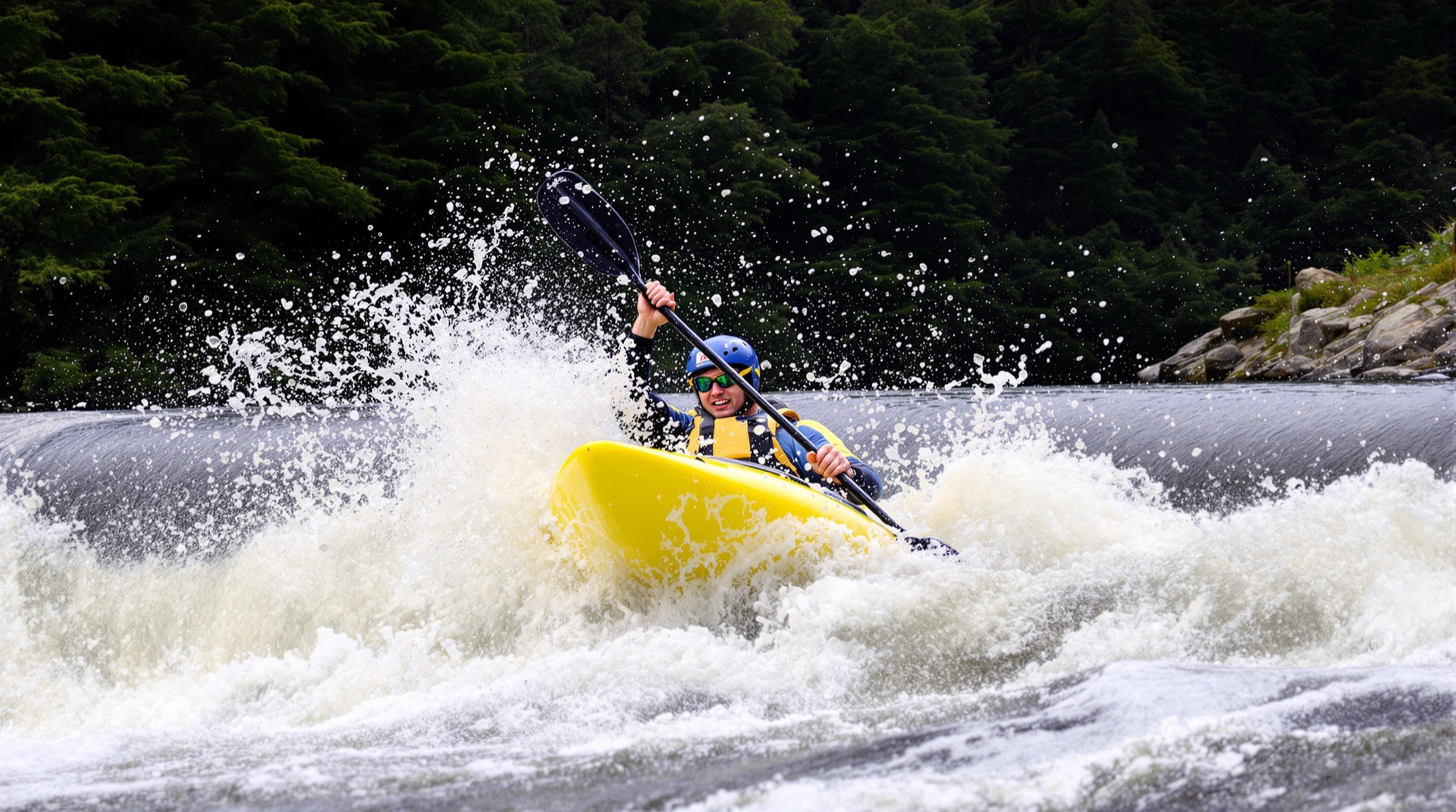
No discipline shows off the outing-club method better than whitewater. A university pool, a fleet of battered boats, and a few patient instructors can turn a student who has never held a paddle into a competent river runner in a single school year. The water is honest, the progression is proven, and the Southeast's great rivers sit one long drive from the heart of the Midwest.
It Starts in a Swimming Pool
The traditional first step is the winter pool session: warm water, zero consequence, and the patient pursuit of the kayak roll — flipping a capsized kayak upright without leaving the boat. The roll is the skill that unlocks whitewater, and it is almost entirely technique: hip snap, paddle sweep, head last. Most people fight it for weeks and then own it forever. Pool sessions also teach the wet exit, the brace, and the unglamorous art of emptying a swamped boat — all before anyone meets a current.
Reading the Scale
Rivers are graded on the international scale of difficulty, and learning it is learning the sport's vocabulary:
- Class I–II: moving water, small waves, easy self-rescue. Where everyone should start.
- Class III: irregular waves, real maneuvering, scouting helpful. The honest intermediate grade.
- Class IV: powerful, precise, consequences for mistakes. Solid roll mandatory.
- Class V: expert. Long, violent, hazardous rapids.
- Class VI: the limit of navigability. For teams of experts at favorable water levels.
Flow changes everything: the same riverbed at different gauge readings can be two grades apart. Check levels and rapid-by-rapid beta on American Whitewater, the sport's indispensable river database and conservation voice.
The Classic Runs
Midwestern paddlers cut their teeth close to home — creeks like Sugar Creek and the Wildcat in Indiana for moving-water basics — then make the pilgrimage south. The Nantahala in North Carolina is the traditional first real river: a forgiving, dam-released Class II–III corridor that has hosted countless club Labor Day trips, with a famous final rapid in front of an audience. From there the ladder runs through the Pigeon, the Hiwassee, and the Ocoee — the 1996 Olympic whitewater venue — toward the big water of the New and, for experts only, the Gauley in West Virginia.
Gear and Safety
The river kit is non-negotiable: a whitewater kayak with flotation, sprayskirt, properly fitted PFD, helmet, paddle, and immersion protection for the season — cold water is the Midwest paddler's most underestimated killer, as our safety guide explains. Club gear closets historically stocked all of it (see the gear closet), which is why the sport stayed accessible to students.
Swiftwater safety is a curriculum, not a vibe: never paddle alone, never boat above your roll, swim aggressively to the inside of bends, keep feet up and downstream, and treat strainers — trees in current — as the lethal hazards they are. Take a formal skills course through the American Canoe Association, learn throw-rope work, and absorb the culture of the eddy-to-eddy buddy system. The clubs that ran decades of trips without tragedy did it by making safety briefings as routine as shuttle logistics. More organizations and instruction sources live in our resource directory.
Teaching It Forward
The pool-session system only works because last year's beginners become this year's instructors. The progression of teaching is itself a skill ladder: first you demonstrate a wet exit, then you spot rolls from the pool deck, then you lead the flatwater session, and eventually you're the boater positioned in the eddy below the rapid, watching your students' lines with your throw rope ready. Teaching consolidates technique like nothing else — explaining a hip snap to a frustrated beginner forces you to understand what your body actually does. The clubs that produced generations of strong paddlers were the ones where instruction was a duty of competence, not a favor. If the river has given you skills, the tradition is unambiguous about the debt: warm water, cold patience, and somebody else's first roll.