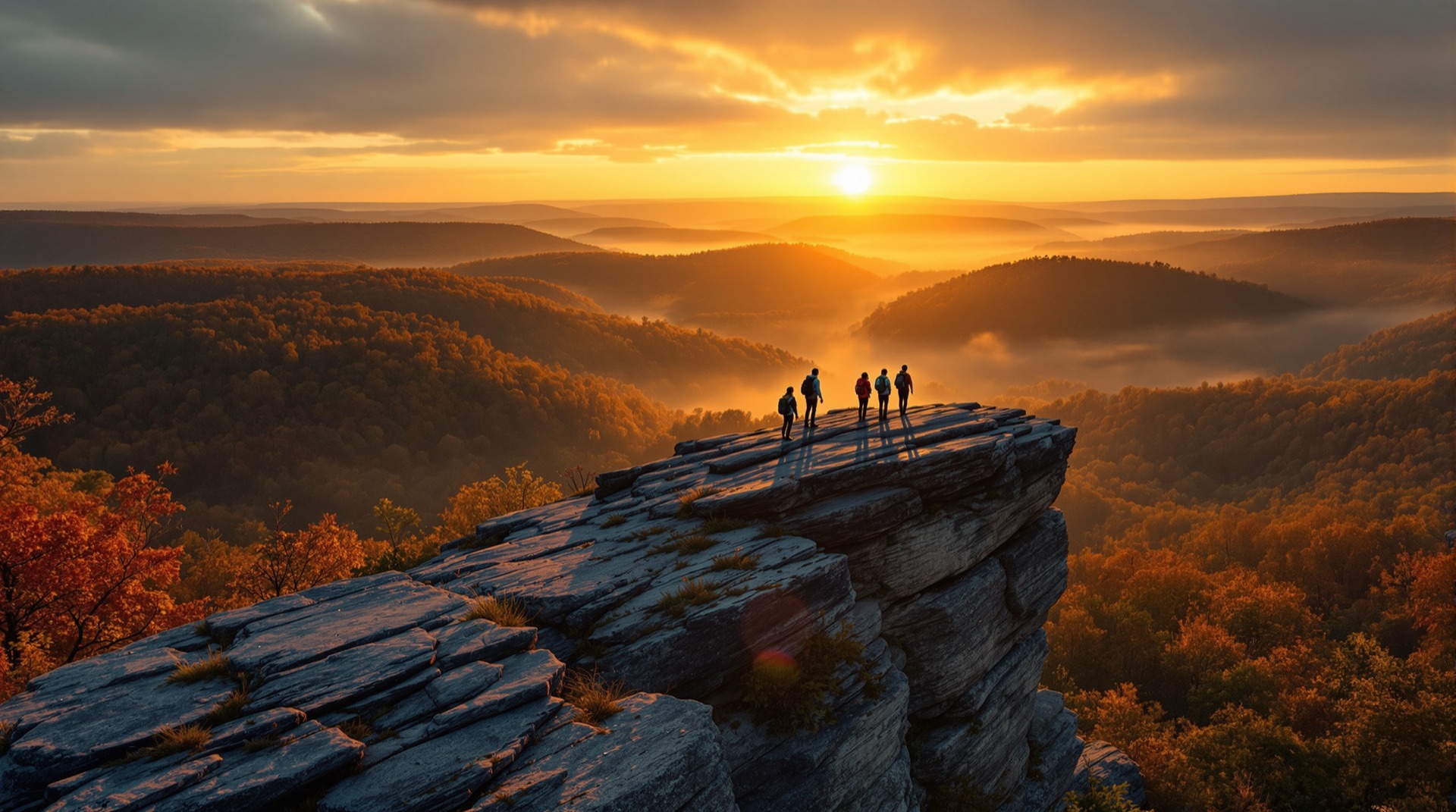
This is an independent history and field guide for one of the best ideas in American outdoor recreation: the collegiate outing club. For more than a century, student-run outdoor clubs have taken people with no experience, no equipment, and no money, and turned them into climbers, cavers, paddlers, and lifelong wilderness travelers. This field guide explains that tradition and the practical knowledge that made it work — with a particular love for the limestone, hardwood, and whitewater country of the American Midwest.
What Is an Outing Club?
An outing club is, at its heart, a place for people who enjoy the outdoors to find each other. The classic model is gloriously informal: weekly meetings where members talk over last weekend's trips, plan the next ones, and welcome anyone who wanders in. Rock climbing, whitewater kayaking, backpacking, hiking, mountaineering, and caving form the traditional core, but the defining trait of an outing club has never been a particular sport. It is the conviction that the outdoors belongs to everyone, and that the fastest way to learn is to go with people who already know.
Trips in the classic outing-club mold are planned in the open. Someone stands up at a meeting and announces an objective — a crag in Kentucky, a cave in Lawrence County, a river in North Carolina — and whoever is interested works out the details together. Bigger expeditions get planned around academic breaks: a desert climbing trip in March, a northern backpacking route in August, a winter mountaineering shakedown over the long January weekend.
Do You Need Experience?
No — and this is the whole point. The outing-club tradition is built on peer instruction. At the start of each season, experienced members historically ran beginner trips designed specifically to teach newcomers how to climb, paddle, cave, and camp. Miss the beginner trip and it never mattered much; someone was always willing to teach. That culture of free, generous instruction is the engine of the tradition, and it is the spirit this field guide celebrates. Our climbing, caving, and kayaking guides are written the same way: assume nothing, explain everything, get people outside safely.
Do You Need Equipment?
Historically, no. One of the great institutional inventions of the outing club is the shared gear closet — a room stacked with tents, sleeping bags, ropes, helmets, stoves, and packs, available to members for little or nothing. A well-run gear library removes the single biggest barrier between a curious beginner and the backcountry: the several hundred dollars of equipment a first trip would otherwise demand. We've documented how these collections worked, what they held, and how to build one in the gear closet guide.
Is It Safe?
Safer than its reputation, and for a specific reason: the outing-club tradition treats risk as something to be studied, sized, and managed rather than dared. Trained trip leaders, conservative turnaround rules, redundant light and layers, and a culture that lets no one's enthusiasm outvote the group's judgment are why decades of trips on borrowed gear built such a good record. That discipline is a skill like any other, and it is worth learning before the first hard trip — start with our health and safety primer, which distills the tradition's whole risk-management curriculum, from wilderness first aid to knowing what you put in your body, into a single page.
Does It Cost Much?
The traditional answer was: dues measured in pizza money. Beyond that, trip costs were split honestly — passengers covered the gas, everyone chipped in for food, and park fees were shared. The economics of the outing club were always radically democratic. Nobody was ever turned away from a campfire for being broke, and the clubs that thrived were the ones that kept it that way.
The Midwest Is Not Flat
Outsiders assume the middle of the country has nothing to offer. The tradition knows better. Southern Indiana hides one of the richest karst landscapes in North America — hundreds of wild caves carved through Mississippian limestone. The Red River Gorge in Kentucky, a few hours south, is one of the finest sandstone sport-climbing areas on earth. The rivers of the Southeast — within a long weekend's drive — offer world-class whitewater. Brown County's flowing singletrack draws mountain bikers from across the region, and the state forests of southern Indiana host one of the most punishing amateur endurance events anywhere: a 48-hour winter adventure race run every January since 2001.
Using This Field Guide
Every section of this site corresponds to a discipline the outing-club tradition embraced: climbing, caving, kayaking, backpacking, mountain biking, mountaineering, and snow sports. Alongside them you'll find the institutional knowledge that kept clubs alive: how to plan a group trip, how to manage risk, and the stories and traditions that turned clubs into communities. For the deep background, start with the history of the outing-club tradition.
If you take one thing from this site, take the ethic. Learn from organizations like the American Hiking Society and practice the Leave No Trace Seven Principles on every trip. The outdoors gave generations of students the best weekends of their lives. Pass it on.