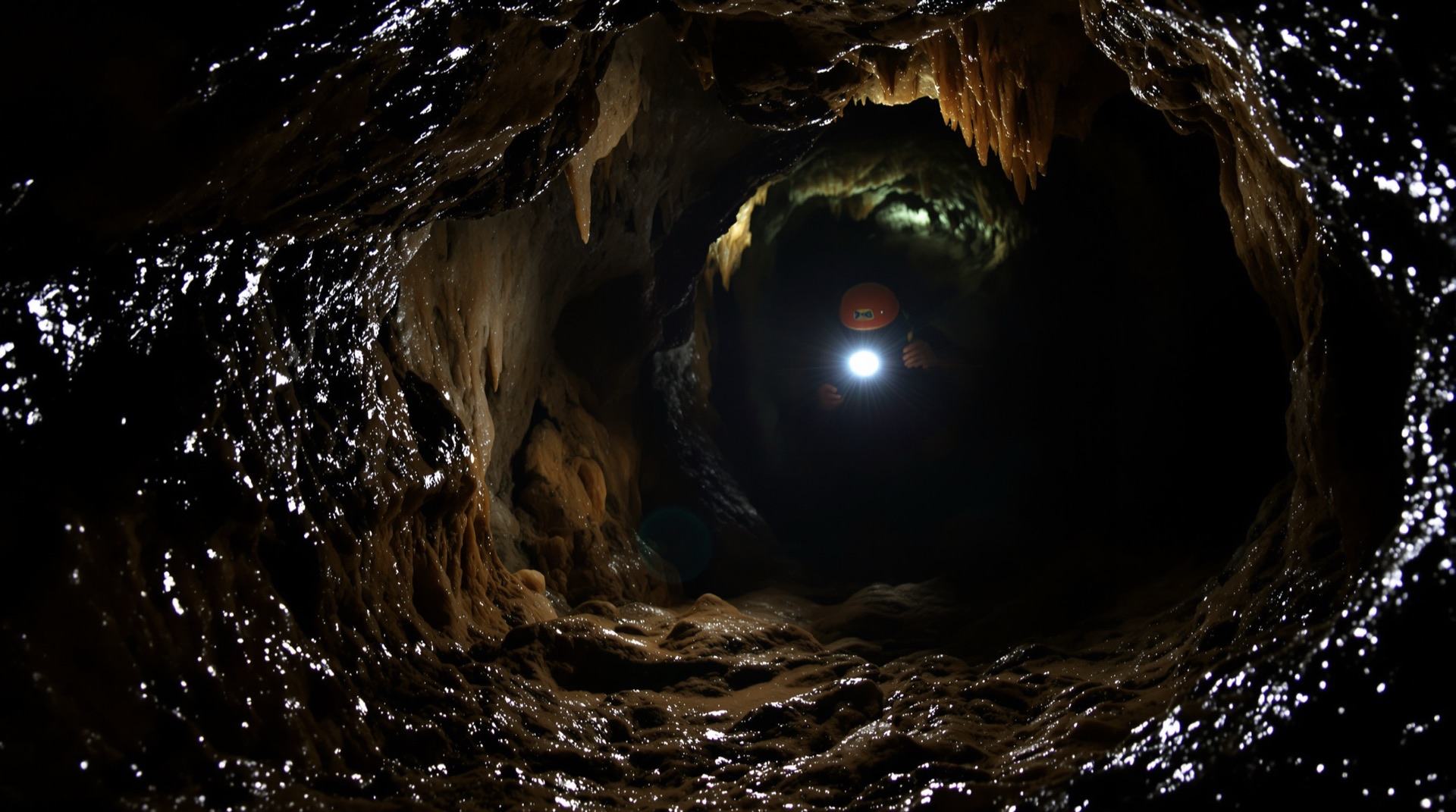
A cave trip starts with a calendar as well as a destination. In the Hoosier National Forest, the Forest Service closes caves seasonally to prevent disturbance of hibernating bats and reduce the spread of white-nose syndrome. Understanding that purpose makes the closed season part of the trip itself: something to plan around before an entrance, a route, or a carpool becomes the weekend's fixed idea.
Why Cavers Think About Bats
The U.S. Fish and Wildlife Service describes white-nose syndrome as a deadly disease affecting cave-dwelling bats across the continent. Its northern long-eared bat account says symptoms were first observed in New York in 2006, and identifies the disease as by far that species' predominant threat. Caves matter in this account because the species typically spends winter in caves or mines, then the rest of the year in forested habitats.
Conservation planning asks a different question from route planning. You might have chosen an underground objective, but is this the appropriate season to enter it? Start with the land manager's rule and its stated purpose. A desirable trip date is something you can change; it is not a reason to reinterpret the closure.
Tell people both when the forest caves are closed and what the Forest Service says the closure is for. That gives a shared basis for choosing another outing, instead of leaving someone to discover the restriction after the travel plan has already been made.
Three Bats Every Indiana Caver Should Know
Indiana Bat
The Fish and Wildlife Service's Indiana bat account describes a small, insect-eating, migratory bat that hibernates in colonies in caves and mines during winter. It was originally listed as in danger of extinction under the Endangered Species Preservation Act of 1966 and is listed as endangered under the Endangered Species Act of 1973, as amended.
For a caver, the practical point is the connection between caves and winter colonies. Read the species account as background for respecting the closed season, rather than as a checklist for locating bats underground. Understanding the animal's use of caves does not require seeking out a colony.
Northern Long-eared Bat
The Fish and Wildlife Service's northern long-eared bat account records its reclassification as endangered in a final rule published November 29, 2022. The species occurs in 37 states and eight North American provinces. The Service reports declines of 97 to 100% in numbers gathered from hibernacula counts across its range, with white-nose syndrome the principal threat.
Those figures come from counts at winter hibernation sites, the caves and mines where the species spends the cold months.
Tricolored Bat
The Fish and Wildlife Service's tricolored bat account describes this species as proposed endangered. It announced the proposal on September 13, 2022, because of the impacts of white-nose syndrome. A proposed listing and an endangered listing are different descriptions; keep that distinction when discussing these three species.
The Closed Season on the Hoosier
The Forest Service's seasonal cave-closure notice closes all Hoosier National Forest caves to visitors from August 16 through May 14. The notice identifies Order No. 09-12-25-04, with an alert start date of September 12, 2025. Its stated purposes are preventing disturbance of hibernating bats and reducing the spread of white-nose syndrome.
The order covers National Forest System lands in the Brownstown and Tell City Ranger Districts, in Brown, Crawford, Dubois, Jackson, Lawrence, Martin, Monroe, Orange, and Perry Counties. Keep the land description with the dates: this is a Hoosier National Forest cave order, not a statement that every cave throughout those counties has the same access arrangement.
Planning Around the Calendar
For a prospective Hoosier cave trip, May 15 through August 15 is the calendar window outside the stated seasonal closure. Treat that as the first planning filter. It does not answer every access question about a particular destination. Write down the cave, the land involved, and the proposed date together, then check the applicable access arrangements before committing to the outing.
A simple planning note can separate what you know from what you still need to establish: the forest closure dates, whether the destination is on the covered land, and whether access for the intended trip has been confirmed. If the date falls in the closed season, choose a different outing. Leaving an underground objective for another time is an ordinary part of planning around conservation.
The Caver's Part
Leave bats undisturbed, and do not turn interest in identifying a species into a reason to approach or handle one. For broader preparation, return to the caving guide's conservation discussion. Keep access and gear preparation on the planning list, and settle unanswered questions before departure. Respecting the calendar is a concrete contribution: the Forest Service states that the closure is intended to prevent disturbance and reduce disease spread.