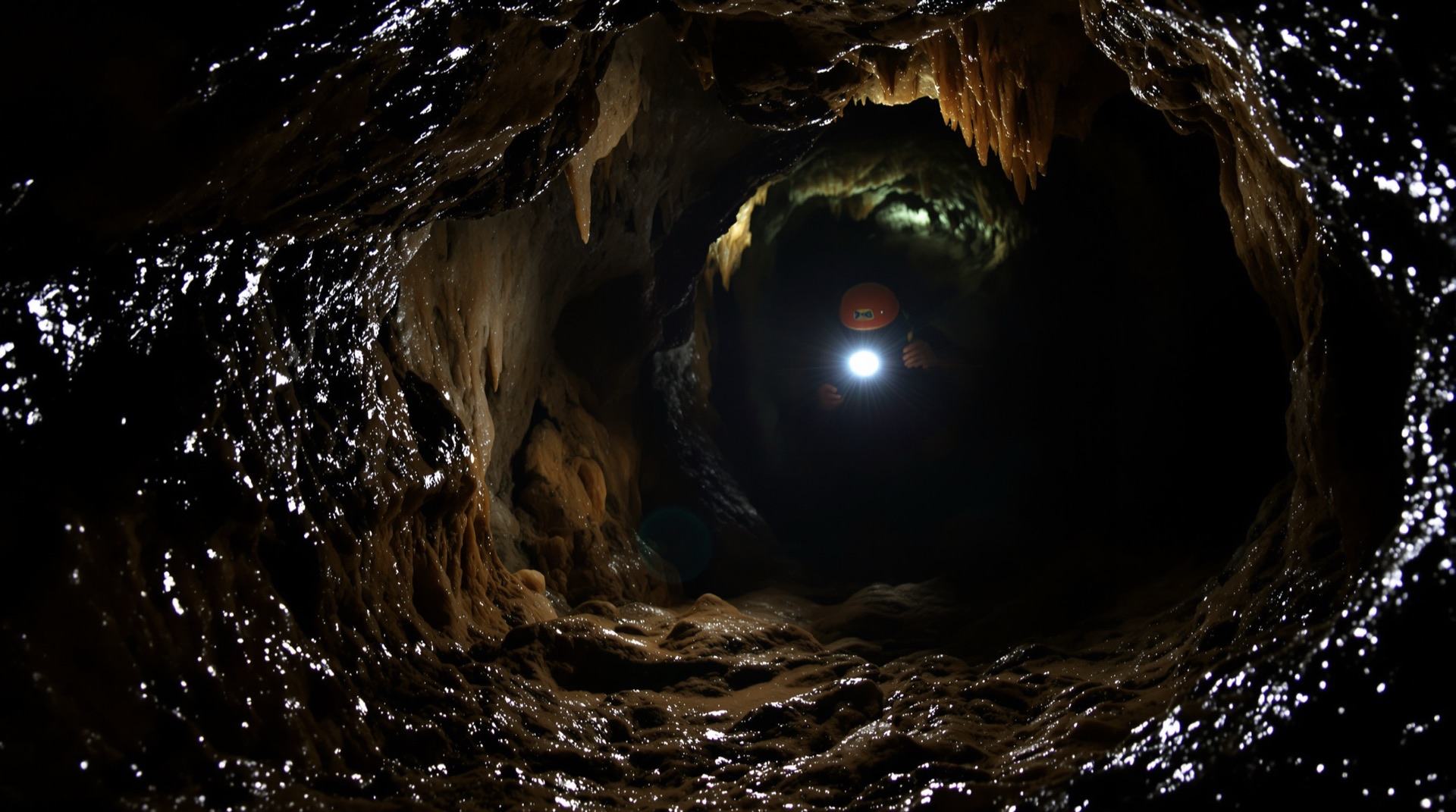
Go in clean, come out dirty. That was the motto of generations of midwestern student cavers, and it still says everything. Caving is the exploration of underground caverns — walking, crawling, rappelling, and climbing through a landscape most people never suspect exists. The enjoyment comes from getting away from the world of concrete and red brick, challenging yourself physically and mentally, seeing formations that took a hundred thousand years to grow, and yes — getting really, gloriously dirty.
You may have heard it called spelunking. Cavers prefer to say caving; it's the same activity, but the word marks who has been underground with people who know what they're doing.
The Indiana Karst
South-central Indiana sits on one of the great karst landscapes of North America. The Mississippian limestone of the Mitchell Plateau — roughly the country between Bloomington and the Ohio River — is riddled with sinkholes, sinking streams, springs, and hundreds of mapped wild caves. The biggest and longest caves in Indiana have, in all probability, not even been found yet. Harrison Spring, the state's largest spring, and the Orangeville Rise drain enormous underground watersheds; only fragments of the Lost River cave system have ever been entered. There are miles of undiscovered passage under the cornfields, which is exactly the kind of fact that keeps cavers up at night.
Classic Wild Caves
- Around Bloomington: Buckner's Cave, Queen Blair Cave, and Wayne's Cave — the traditional training grounds of student cavers, with everything from walking passage to honest crawls.
- Lawrence County: Sullivan Cave, a long, sporting classic with stream passage and serious trip potential.
- Bedford: the Doghill–Donnehue system, a storied trip that generations of beginners have emerged from soaked and grinning.
- Harrison-Crawford State Forest: a karst playground in the state's far south, honeycombed with caves near the original site of the great winter adventure race.
Access to wild caves changes constantly — landowner relations, gating, and conservation closures all matter. The right way in is through an organized grotto of the National Speleological Society, whose local chapters run beginner trips, teach technique, and manage access agreements. Never go through a farmer's gate on a rumor.
Show Caves Worth the Ticket
Indiana's commercial caves are a genuinely good first date with the underground: Bluespring Caverns (an underground boat tour on a subterranean river), Marengo Cave (a National Natural Landmark), the cave tours at Spring Mill State Park, Squire Boone Caverns, and the Wyandotte Caves complex. Across the border, Mammoth Cave National Park in Kentucky protects the longest known cave system on Earth — more than 400 mapped miles.
Conservation: Bats and Beyond
Caves are fragile, and the things that live in them are more fragile still. White-nose syndrome, a fungal disease devastating North American bat populations since the mid-2000s, transformed caving ethics: decontamination of gear between caves is now standard practice, and seasonal closures protect hibernating colonies. Learn the protocols from Bat Conservation International and follow them without exception. Formations obey one law: nothing in a cave grows back on a human timescale. Take nothing but pictures, leave nothing but footprints — and place even the footprints carefully.
Starting Out Safely
The old club rules remain the canon: never cave alone; minimum party of three or four; three independent sources of light per person; helmet always; tell a responsible person exactly where you're going and when you'll be out. Cotton kills underground — caves in Indiana hold a steady low-50s°F and wet passages strip body heat fast, so synthetics and a good base layer are mandatory. Read our health and safety primer on hypothermia before your first wet cave, kit up from the gear closet guide, and find your local grotto in the resource directory. Vertical caving — single-rope technique on ascenders and racks — is its own discipline; learn it on a sunlit cliff with a mentor before you ever trust it in the dark.